
Asylum support accommodation on ‘large sites’ — an information pack
Olivia Halse and Anya Draycott-Kapp of solicitors Gold Jennings describe the work they have done on “large sites”.
The case of TG and others v Secretary of State for the Home Department [2025] EWHC 596 (Admin) sought to challenge not only the lawfulness of use of RAF Wethersfield as asylum support accommodation for vulnerable asylum seekers, but also the home secretary’s Allocations of Accommodation Policy, which governs the provision of asylum support accommodation and sets out the ‘suitability criteria’ as to who is considered unsuitable for large-site accommodation.
Gold Jennings represented one of the lead claimants (TG), and Deighton Pierce Glynn (DPG) represented two others (HAA and MN). These individuals are victims of trafficking, torture and/or serious physical violence, who each suffered a serious decline in their mental health as a result of living at Wethersfield. Throughout the life of the case, the suitability criteria changed numerous times, as did the processes and practices used by the Home Office in deciding suitability.
In March 2025, the High Court handed down judgment finding that the home secretary had acted unlawfully in accommodating the individual claimants at Wethersfield and had breached her duties under the Immigration and Asylum Act 1999. In relation to TG only, Justice Mould held that the defendant also discriminated against him by accommodating him at Wethersfield in breach of its duty to make reasonable adjustments for TG’s disabilities under the Equality Act 2010.
On a systemic level, the High Court rejected the claimants’ arguments and ruled that the home secretary’s updated policies and procedures for identifying asylum seekers whose vulnerabilities meant that large site accommodation was unsuitable for them were capable of operating lawfully.
However, the breaches found by the judge in the cases of TG, MN and HAA illustrate that the home secretary is not only required to have a system capable of operating lawfully, but must act lawfully in each individual case, and the failure to do so in an individual case will still be unlawful and a breach of her duty to provide adequate accommodation to destitute asylum seekers.
Further information in relation to the judgment can be found here.
Current situation
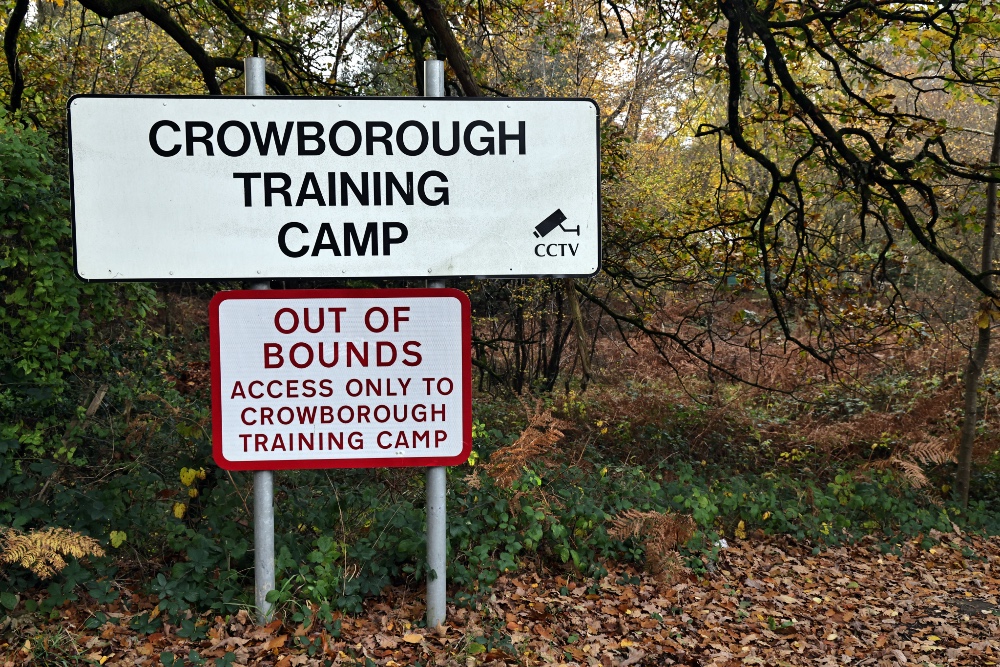
Despite the current government’s manifesto pledge to shut down RAF Wethersfield, the site is still in use. In fact, the home secretary has recently decided to increase the capacity of Wethersfield and open new large sites across the UK, including Crowborough Barracks in East Sussex and Cameron Barracks in Inverness, Scotland.
The home secretary’s published policies make clear that large sites are not suitable for asylum-seekers considered ‘vulnerable’ and the thrust of their argument in TG and others was that the policies and processes now in place (namely, the updated version of Allocation of Asylum Support Accommodation policy) should prevent vulnerable asylum seekers who are unsuitable from being placed in large sites in the first place.
Failing that, the home secretary’s position is that there are numerous avenues through which issues of unsuitability can be raised by residents for their suitability to be re-assessed and, if necessary, for relocation to alternative accommodation to take place.
The suitability criteria
In brief, the policy states that large sites will not be suitable for potential victims of trafficking who have received a positive reasonable grounds decision via the National Referral Mechanism, and may not be suitable for other ‘vulnerable’ people with special needs.
Vulnerable people include:
- Minors
- People over 65
- People with disabilities or complex health needs
- People who have experienced torture, rape and other serious forms of psychological, physical or sexual violence.
The policy requires that these people have evidence (or an individual evaluation) that confirms that their vulnerabilities mean they have needs that cannot be accommodated at the large site.
Information pack
Following the case of TG and others, Gold Jennings, DPG and Care4Calais have been granted strategic legal funding for a project relating to the ongoing use of RAF Wethersfield and other ex-Ministry of Defence sites (‘large sites’) as asylum support accommodation. As part of that project, we have prepared an information pack for residents of large sites and the organisations supporting them to assist in understanding the suitability criteria and raising concerns about vulnerable asylum-seekers being housed there.
The information pack provides details of the suitability criteria, guidance on how to evidence and raise concerns around unsuitability according to the home secretary’s policies. The pack also includes template forms and letters that can be used to obtain further evidence and can be tailored to residents’ individual circumstances when seeking a reassessment of unsuitability.
It is hoped that these resources will assist vulnerable residents and supporting organisations in gathering evidence of unsuitability, raising issues of unsuitability via the channels set out by the home secretary in the TG judgment and successfully requesting relocation out of large sites.
As was found in the TG judgment, although the policies and processes were found to be capable of acting lawfully, if it can be established that these processes are not being followed on an individual basis and appropriate action is not being taken to reassess suitability and relocate where necessary, this may be unlawful and susceptible to challenge.
If any organisations or individuals encounter cases where a vulnerable person has been unsuitably housed in a large site and the Home Office has failed or refused to relocate them despite following the processes and procedures set out in the information pack, please do not hesitate to contact Gold Jennings to discuss how we might be able to assist.
Olivia Halse (olivia@goldjennings.co.uk) and Anya Draycott-Kapp (anya@goldjennings.co.uk)
Main image: Shutterstock