

Could there be community-based alternatives to asylum hotels?
Behind the government’s rhetoric about ending the use of hotels for asylum accommodation and pursuing alternatives like military barracks, there are also quiet moves towards more community-based solutions. Is there a real opportunity to move towards more humane ways of accommodating those seeking asylum?
Can pilot schemes reshape the asylum housing system?
Adam Forrest in The i Paper is following the government scheme. He says that around 200 local authorities want to take part in a pilot project that gives them money to build new housing or refurbish derelict properties for asylum seekers.
The pilot would allow councils to buy more properties — including in new housing developments where homes are failing to sell — to boost their social housing stock and reduce the reliance on private contractors. Initially, properties would be leased to the Home Office, but could later revert to social housing, with the aim of saving local authorities money in the long run.
Five councils have confirmed to The i Paper that they are keen to take part: Brighton and Hove, Hackney, Peterborough, Thanet, and Powys.
Bella Sankey, leader of Labour-run Brighton and Hove City Council, told The i Paper she hoped the scheme could be the start of a systematic overhaul in asylum housing. She said the current system was “inefficient” in allowing taxpayers’ money to be “creamed off for handsome profits by private companies”.
Sankey believes councils could offer new arrivals better support, since they already run adult social care, education and have strong connections to the charity sector. In the longer term — if the asylum backlog can be brought down — councils could use the new or refurbished properties for social housing, she claimed.
Helen Whitehead, deputy leader of Labour-run Thanet District Council, said her local authority wanted to take part in the pilot scheme because the current system “provides poor-quality accommodation at great financial cost”. She added: “We welcome the potential to provide more safe and suitable temporary housing and to add to our council portfolio in doing so.”
However, in other areas, there have been concerns about the idea. Chris Read, the Labour leader of Rotherham Council, is sceptical of the prospect of “renationalising” asylum accommodation. He fears that anti-asylum anger — currently aimed at hotel owners and firms like Serco — could be redirected towards local leaders. An asylum hotel in Rotherham was targeted in riots last summer, with one man who tried to set fire to the place jailed. Read also argued that he would be expected to spend any extra housing funding on social housing for residents, with around 4,000 people on Rotherham’s waiting list.
George Madgwick — a Reform UK councillor in Portsmouth who has campaigned against asylum seekers being placed in HMO flats in his area — also thinks it is a bad idea. “It’s uncomfortable territory if councils were prioritising the needs of people who arrived here on small boats over those born and bred in the community,” he said.
Kate Wareing, chief executive of Soha Housing Association in Oxfordshire, said she hoped the council pilot scheme is just the start. She is keen for housing associations to take part in a wider asylum housing overhaul. Investing £1.75bn could allow social housing providers to buy or renovate between 14,000 and 16,000 homes, according to a report Wareing co-authored last year.
Chris Bailey, of Action on Empty Housing, said he thought fixing up at least some of England’s 300,000 long-term, decaying empty homes for asylum seekers could address two problems at once.
Tim Naor Hilton, chief executive of Refugee Action, said locally run housing offered a more “humane, accountable and value-for-money model”.
The i Paper had a follow-up report on the pilot on 5 January.
Inside Housing reported that the pilots are testing various models. Councils will bring their own empty stock back into use, buy up new homes to house asylum seekers and work with the government to identify medium-sized sites in their areas. Inside Housing understands that local authorities would lease properties to the Home Office at local housing allowance (LHA) rates for a 10-year term. After this, councils would regain control of the properties, when it is hoped demand for asylum accommodation will subside.
In this issue, Kate Wareing explores the pilot in further detail and how it might work.
Home Office select committee examines the management of asylum accommodation
In a very detailed, 120-page report published on 27 October, the Home Affairs Committee examined how the Home Office responded to the increase in demand for asylum accommodation and explored how the system could be strengthened and reformed.
It argued that the Home Office needs a clear strategy for taking advantage of the break clauses in the accommodation contracts that occur in 2026. It looks in detail at options for improving the system, including decentralising it to local authorities, but considers that local authority provision could only be part of the solution. However, it calls on the Home Office to be open about the current pilot scheme with local authorities, and its results.
Refugee Action’s latest report on how we house people seeking asylum
A new report by Refugee Action, Laying the Foundations, based on interviews and surveys with 38 councils in England, explores what the government must do to make a locally run housing system deliverable and sustainable.
The report calls on government to:
- Build, buy and convert social homes for permanent community use and properly fund councils to deliver services
- Restore trust with local government and work with them to design a system in which roles are clearly defined and funded
- Reform the dispersal system so areas share responsibility, with a view to introducing choice for people seeking asylum.
- Stop demonising migrants and foster unity in towns to create the political space for change.

To coincide with the report, there is an ‘email your MP’ action (please fill in and share).
Build-up of pending cases reverses progress made to reduce numbers housed in hotels
The number of asylum appeals waiting to be heard by the UK’s main immigration court grew by 37 per cent in the six months to 30 September, setting back the government’s efforts to end the use of hotels to house would-be refugees. The increase, revealed in Ministry of Justice figures published in December, took the number of pending cases in the first-tier immigration appeals tribunal to 69,670, compared with 50,976 on March 31. The latest figure is more than double the 34,234 recorded on September 30 last year.
A new study by the National Audit Office attempts to quantify the causes of delay and inefficiency in the asylum system. The NAO studied a sample of 5,000 people who lodged asylum claims in January 2023. It said the Home Office’s systems did such a poor job of tracking the people left in limbo — who accounted for 36 per cent of the sample — that it was impossible to say what was happening to them. Spending by councils on asylum is also “poorly understood” by the Home Office.
Free Movement offers a summary and comments on the NAO report.
Together with Refugees’ new report, Welcoming Growth: The economic case for a fair and humane asylum system, argues that refugees could bring £266,000 each to the UK economy. Freedom from Torture also wants to “change the conversation” on housing asylum seekers with its new guide.
In the Big Issue, Krish Kandiah, from the Sanctuary Foundation, made the case for community sponsorship of refugees. She points to research by More in Common, which shows this form of controlled and coordinated refugee resettlement is supported by the public — even among the most migration-sceptic segments of the population.
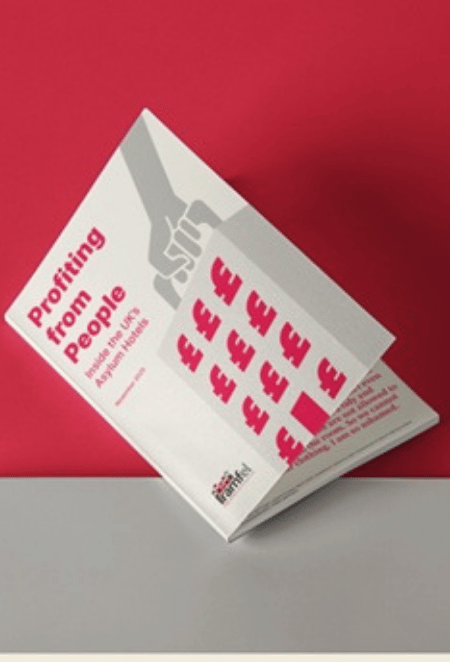
Profiting from People: Inside the UK’s Asylum Hotels
RAMFEL’s new report draws on over two years of work supporting people trapped in hotel accommodation. The report uses case studies from RAMFEL clients and excerpts of doctors’ notes where interventions were necessary because people’s health and wellbeing were at serious risk.
It found that:
- Forty-nine per cent said their room was overcrowded, with whole families of six in a single space
- Eighty per cent said the food was “really bad”, and largely inedible
- Thirty-four per cent had a medical condition or disability, yet none received necessary adjustments
- Seventy-five per cent raised concerns, but in 76 per cent of such cases no corrective action was taken.
RAMFEL comments:
“While families live in crowded, mouldy hotel rooms, and are served inedible food, three big companies pocket millions. It’s time to end the use of asylum hotels and invest in real homes, not corporate shareholders.”
RAMFEL’s Layla Hussain writes about the report in Big Issue.
More on asylum seekers in hotels
- Epping Forest District Council cannot challenge a decision to allow the Home Office to intervene in its unsuccessful bid to block asylum seekers staying at a hotel, the Supreme Court ruled. The council won an emergency interim injunction to close the Bell Hotel to migrants in August and a ruling that the Home Office could not intervene — but this was overturned by the Court of Appeal. The council saw its bid for a permanent injunction dismissed earlier in November (see also the article by Kama Petruczenko in last Autumn’s newsletter).
- The government recovered £74 million from excessive profits made by companies running asylum accommodation, the BBC revealed in November.
- More than 50 lone-child asylum seekers who disappeared soon after arriving in the UK and while in the care of the authorities are still missing, according to the Guardian. Between 2021 and 2023, 132 children went missing from hotels; 24 are still missing. Between 2020 and August 2025, 213 children went missing from Kent County Council’s reception centres for this group of children, with 32 still missing.
- The Home Office is urged to be transparent about deaths of asylum seekers in its care, campaigners tell the Guardian.
- Plans to give asylum seekers £100 per week to leave hotels won’t work, argues Dan Sohege on Bluesky.
Remember to make use of the Housing Rights website’s guide to helping people who are evicted from hotel accommodation, written by Sue Lukes.
Government moves to open more accommodation in barracks
- As refugee organisations and local politicians described plans to house tens of thousands of people in ex-military sites as “fanciful” and “too expensive”, No 10 said “…communities don’t want asylum seekers housed in hotels, and neither does the government. Quelling public disquiet is worth the extra cost…” of using barracks for asylum housing.
- Plans to move about 540 single men into Crowborough Training Camp in East Sussex, and up to 300 into Cameron Barracks in Inverness were delayed, the FT reported in November. Asylum camp rumours prompt “fear and night vigils” in Crowborough, according to the Guardian. Regardless, the first asylum seekers are expected to arrive at Crowborough early in 2026.
- An inquiry into what went wrong at an asylum seeker processing centre three years ago is at a standstill, critics have said. A commitment to hold an inquiry into conditions at Manston in Kent in the second half of 2022 was first made by the then home secretary in March 2024 after 18,000 people were unlawfully detained in horrific conditions. Lawyers acting for some of those unlawfully detained are calling for an end to the delays.
- Napier barracks has finally closed after being one of the most contentious sites for accommodating asylum seekers (see past issues of the newsletter).