
News and comments on latest policy developments — September 2026
Prime minister pledges route off the streets for everyone sleeping rough by Christmas
Prime minister Andy Burnham has announced £442 million in funding as part of his drive to offer everyone sleeping rough a route off the streets by Christmas. The approach seems to be based on the ‘Everyone In’ scheme operated during the pandemic. This included those with no recourse to public funds, appeal-rights-exhausted asylum seekers and others. Details are awaited.
Burnham told The Big Issue that the initiative is not just a “little one-off for Christmas” but a permanent commitment.
Far from welcoming the pledge, Reform leader Nigel Farage said “Burnham’s pledge to house homeless will attract more migrants”. The message would be, he said: “You get everything free if you come by boat.”
Migrant and refugee support charities, such as Praxis, have publicly responded by stating that, if the prime minister is truly serious, his government must scrap the hostile immigration rules that push migrant families onto the street in the first place.
“Women can’t be left out in the cold if we are to end rough sleeping,” Ella Tritton told The Big Issue. She recounts the story of Miriam, who spent years living in the shadows as a woman with no recourse to public funds. “Without acknowledging the link between homelessness, immigration status and gender inequality, no government will ever succeed in ending rough sleeping,” Tritton says.
During September, a Women’s Rough Sleeping Census is taking place across England.
Charities such as Positive Action in Housing are actively focusing their winter resources on providing immediate transitional housing to keep migrants from hitting the streets.
In the meantime, government guidance to local authorities on No Recourse to Public Funds has been updated.
The Immigration and Asylum Bill moves forward
The Immigration and Asylum Bill is at committee stage in the House of Commons. The Bill is now moving into detailed line-by-line scrutiny, with the Public Bill Committee beginning its consideration on 15 September and expected to report by 3 November. The Committee is currently inviting written evidence, providing an opportunity for organisations and individuals to contribute evidence directly to the scrutiny process.
Various bodies have set out their views on the Bill:
- The UN High Commissioner for Refugees published its observations on the Bill, including concerns about whether the plan to charge refugees for the asylum accommodation they received is compatible with Article 29 of the Refugee Convention
- The Welsh Refugee Council outlined its six concerns about the Bill, stressing that faster decisions only work if people can get legal advice, which is often difficult in Wales
- JCWI called on MPs to reject the Bill in its entirety
- The Immigration Law Practitioners’ Association’s published lengthy and detailed analysis here.
CIH has made a submission to the Joint Committee on Human Rights’ examination of the Bill, to be published in due course.
On 15 September, the Home Secretary Shabana Mahmood faced the Home Affairs Committee for an oral evidence session on the work of the Home Office. A recording of the session can be viewed here.
More responses to the Bill and ‘earned settlement’ proposals
Diane Abbott MP writes in the Morning Star on why we should oppose the Bill. She says: “It will not improve either the immigration or asylum systems in this country. Instead, it will remove people’s fundamental rights, increase the demonisation of both immigrants and asylum-seekers and play into the hands of the anti-immigrant right.”
Arj Singh, in The i Paper, says Mahmood’s “hardline” immigration reforms have been hit by a growing rebellion. More Labour MPs now publicly oppose the home secretary’s changes to indefinite leave to remain.
In Remigration by stealth? The government’s earned settlement proposals, James Bowes, of the University of Warwick, argues that proposed new settlement rules “…won’t just affect new immigrants but will also affect over 2 million immigrants already living in the UK. These changes will force many legal immigrants to leave the country entirely”.
The Greater Manchester Immigration Aid Unit has published a briefing on the proposed earned settlement system, examining its potential implications and the uncertainty it has created. It has useful information for organisations supporting people who may be affected by changes to the rules.
On 13 September, the Trade Union Congress voted to condemn the proposed changes to settlement routes and demand the withdrawal of the proposals. Then Shabana Mahmood said the proposals will be implemented “later in the year”, without mentioning any specific date.
Labour is meeting several of its pledges on migration
The Migration Observatory has an interesting assessment of Labour’s pledges on migration, made for the 2024 election. Of six pledges, reducing net migration, work visas and small boat arrivals have all been carried out, though partly as a result of the previous government’s policies. More people without legal status have been returned, and the government has cut — but not yet ended — the use of asylum hotels.
The exception to the five “successes” is the asylum appeals backlog, now around 90,000, and at last showing signs of coming under control. Free Movement points out that this is the problem the new Bill is meant to solve.
Latest figures show falls in visas, asylum claims and small boat arrivals compared to a year earlier, reports the BBC:
- Arrivals on small boats were 33,000, marking a 23% drop compared to the previous year — but still in line with the same period in 2024 and 2022
- Asylum claims were also down, with 86,000 people claiming refuge in the UK — however, the government notes they are at similar levels seen prior to 2021
- The number of asylum seekers housed in hotels was also down to 16,000, as almost every local authority area saw a drop in hotel use
- Remigration (foreign nationals leaving) is at an all-time high of 1,000 a day.
The latest immigration statistics, released on 27 August, also showed that 40,168 people were awaiting an initial asylum decision at the end of June — 56% fewer than a year earlier and the lowest level since June 2019 — while 116,000 people received an initial decision during the year. The UK asylum backlog is explained by Full Fact.
Fraser Nelson, a columnist for The Times, declaims “Britain’s secret border-control success”.
The government responded to a recent Public Accounts Committee report on the asylum system.
Immigration changes are worsening the care crisis
New data shows the government’s immigration changes will deepen the staffing crisis in social care, says UNISON. The number of international workers recruited into care roles fell dramatically from 105,000 in 2023/24 to 30,000 in 2025/26. The number of care jobs filled by British workers also fell by 70,000.
The union has written to the home secretary arguing this disproves the claim that curbing overseas recruitment would increase uptake by British workers. It has called on her to scrap plans to make international care staff wait longer to settle, warning this would “cause chaos and irreparable damage to a sector that needs international workers”.
UK charges three times as much as other G7 countries for citizenship
People applying to become British citizens are charged more than five times the amount it costs the Home Office to process their application, according to new analysis from IPPR.
The £1,709 naturalisation fee compares with an estimated administrative cost of just £324. Applicants must also pay a further £130 for a citizenship ceremony if successful, taking the total cost of becoming a British citizen to £1,839. The UK charges considerably more than other G7 countries — more than three times the next highest — the United States at £562.
IPPR also published a new report, From strangers to citizens: Membership and belonging in an age of migration, examining the citizenship issue in detail.
The Bureau of Investigative Journalism shows the government makes £5 billion a year from immigration fees while “applicants are forced into debt”. Fees charged for visas, citizenship and the health surcharge far outstrip the actual cost to the Home Office.
Changes in policy on asylum accommodation?
The prime minister is “open to” ripping up multibillion-pound asylum hotel contracts early, reports The i Paper. Asked if he would consider ending the contracts early and letting mayors have more influence over decisions, Burnham said: “I’m open to a discussion with regional mayors and I’m sure the Home Secretary is, where local solutions would be better than the situation that we have at the moment.”
Burnham said the current system is a “top-down process”, which results in local authorities “not being adequately consulted about accommodation, not even notified sometimes”. “I can understand why people want to see the change,” he said.
Meanwhile, the government announced the closure of 13 more asylum hotels, saving £51 million. Fewer than 160 hotels are now used to house asylum seekers, down from 400 under the previous government.
Ministers are also considering raising the caps on how much private landlords can be paid in rent so that dispersal accommodation can be spread more evenly across the UK, rather than concentrating it in the most deprived areas. Some 17 local authority areas house no asylum seekers at all.
Reform and the Conservatives say they will try to block plans to move some migrants to more expensive postcodes.
Asylum seekers placed in housing that poses ‘imminent safety risk’
Home Office and local council staff sent to inspect housing for asylum seekers and their families have found dozens of hazards so serious that they pose an “imminent risk” to tenants’ safety, data obtained by Hyphen reveals.
Collapsed ceilings, damp and mould-ridden homes, overcrowding, vermin infestations and excess cold are among the issues affecting people — including children — who live in the properties, run by firms such as Serco and Clearsprings.
Furthermore, new research by Sufra and the SALIENT Consortium explores the reality of food provision in asylum hotels. Based on the experiences of asylum seekers alongside insights from frontline Sufra staff, the report highlights serious concerns around diet and food access.
Separately, The Guardian reported that 40 children reported missing from UK asylum hotels have still not been found (the tragedy has been covered in previous newsletters).
More asylum news
- “I would rather die than return to France”: Aso and Baran fled Iran, crossed the Channel together and were both returned to France. After risking their lives to reach Britain again, the friends found themselves facing very different fates, they explain to The Guardian.
- Writing in The Guardian, Diane Taylor argues: “Drones, tear gas, riot squads: why has the UK gone to war against asylum seekers already fleeing conflict?”
- Why can’t the Home Office stop asylum fraud? Chris Bayliss challenges Home Office processes and legislation in a controversial piece for UnHerd.
Update on the Allocation of Asylum Accommodation policy
Following the successful challenge brought by Freedom from Torture and Helen Bamber Foundation, the Home Office has now updated the policy to restore some key protections for survivors of torture and other highly vulnerable people seeking asylum.
In summary, in relation to the suitability of room-sharing accommodation and ex-MoD sites, the updated policy:
- Restores the presumption that room-sharing accommodation and ex-MoD sites are unsuitable for survivors of torture or serious violence and individuals with serious mental health concerns
- Retains the approach for other vulnerable groups, including disabled people, elderly people (for room-sharing purposes), and those with various illnesses, whose suitability remains subject to an individual assessment of whether their needs can be met within the accommodation.
There are other changes to the policy relating specifically to Freedom from Torture and Helen Bamber Foundation clients.
Communities Not Camps
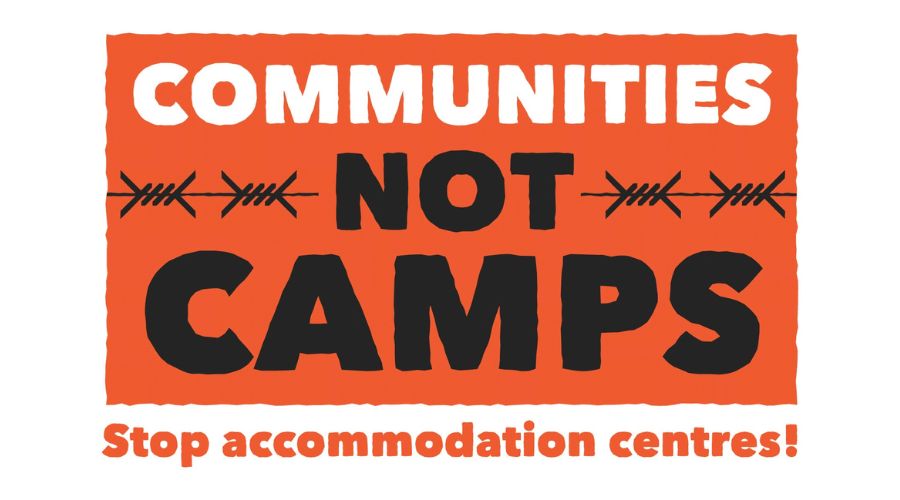
The Action Network says that government continues to press ahead with plans for unsuitable, harmful camps which bypass normal planning routes, provoke opposition to new sites around the country, while the prime minister promises to look at the issue. In Essex, the Reform-led county council has allocated public money to pay for private security guards in towns nearby the existing Wethersfield camp, whilst the Chief Constable of Essex Police stated “there is absolutely no reason for anyone to be concerned” about crime associated with those placed there.
The camps harm people seeking safety and have become focal points for division and agitation in communities. The Action Network urges people to write to their MP to ask them to oppose the camps and house people safely in our communities.
Changes to settlement policy for migrant victims of domestic abuse
Changes to the Immigration Rules expand settlement protections for migrant victim-survivors of domestic abuse. For the first time, the policy will go beyond intimate partner relationships to include some adult children whose immigration status depends on a parent or their parent’s partner.
Rights of Women has a four-page update and news item on the changes.
Other news
- Windrush. A wide-ranging group of lawyers has written to the government with a range of recommendations for achieving justice for victims of the Windrush scandal.
- Britain’s shifting population. A video explains which parts of Britain are growing and which are losing population.
- Second-generation immigrants do well. Anglosphere immigration continues to be different from immigration elsewhere — second-generation immigrants in the UK score better than the native-born on tests (while this is not true in much of the rest of the OECD).
- Migration and housing pressures in Wales. A new research briefing looks in detail at the effects of migration on population growth and housing demand.
- Recording Immigration Status. Is immigration status something your organisation should be recording? What issues might arise? In this video, Bethan Lant from Praxis shares case studies from St Mungo’s and Housing Justice to help you answer these questions.
- ‘Understanding behaviours and expectations in the UK’ guide. Women for Refugee Women has several concerns about the new Home Office guide.
News on advice services and workshops
- Coram Children’s Legal Centre offers one-off advice sessions for young people. Advice and support covers a range of issues relating to housing. Sessions typically last between 30 minutes and an hour. If someone you are supporting is experiencing housing difficulties, you can refer them through this form.
- Coram outreach sessions. Coram are also looking to set up in-person outreach sessions with organisations in London that work with young people. If you or an organisation you know of might be interested, please contact lauryn.musgrovemccann@coramclc.org.uk.
- Lift the Ban Coalition online meeting. Lift the Ban is the campaign for asylum seekers to be allowed to work. It has an online coalition meeting on 13 October at 6pm. It will be an opportunity to share updates, hear from different perspectives on the right to work and discuss priorities for the coming months. Sign up for updates here.
- Stronger Together: Inter Faith Week. Together With Refugees and Inter Faith Week are partnering from 8–15 November to celebrate the friendships and connections across faiths and communities created through refugee welcome. Organisations and communities are invited to get involved by downloading the toolkit, which includes ideas and resources for activities such as shared meals, walks and creating a wall of connection.