Other developments on asylum accommodation and support
Hostile Housing — The health impacts of housing for people seeking asylum
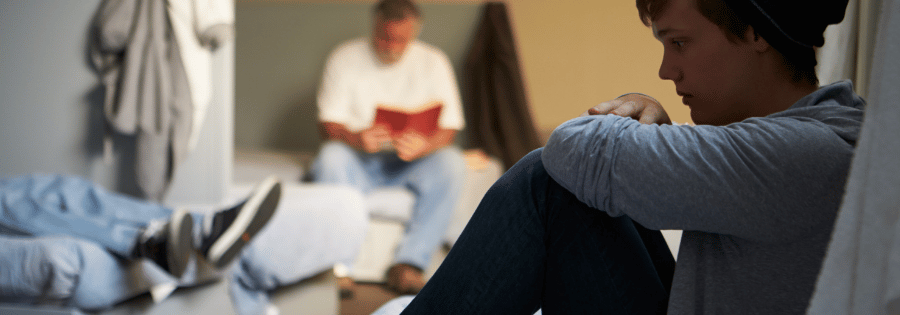
Migrants Organise and Medact have published Hostile Housing, a new report outlining how asylum accommodation is harming the health of people seeking protection in the UK.
The findings, drawn from a survey of 60 people living in asylum accommodation, predominantly asylum hotels, reveal:
- Overcrowding, damp, poor ventilation and mould leading to respiratory problems, skin conditions and mental health deterioration.
- Majority of respondents in catered accommodation reported experiences indicating serious problems with food access, including, poor quality, limited variety not eating despite feeling hungry and skipping meals. Two-thirds of people rated food quality as poor. Children were significantly affected, with half refusing meals daily and over half experiencing weight loss.
- Over half of respondents felt unsafe in sharing complaints with accommodation staff. A third were not allowed visitors, while those in supported accommodation faced time restrictions around leaving sites.
- Respondents reported being watched and monitored, feeling unsafe, and raised concerns about staff.
As the Home Office moves to shut down asylum hotels, the report shows there is a need for safer, community-focussed housing models. In particular, the report recommends that asylum accommodation should be placed in the hands of local authorities that can prioritise not-for-profit community housing models.
Accommodating asylum-seeking families in hotel rooms
Solicitors Deighton Pierce Glynn brought judicial review proceedings challenging the Home Office’s approach to and practices of accommodating asylum-seeking families in hotel rooms. Following a full hearing in December 2025, judgment was handed down on 26 March 2025. (See: R (SH and Another) v SSHD [2026] EWHC 729 (Admin).)
The claim was partially successful. The judge did not agree that the overcrowding legislation found in the Housing Act 1985 applied to asylum hotel accommodation.
However, the judge did make the following findings:
- For most families, being accommodated in a single hotel room would not be adequate for more than three months. This depends on the size of the family and age and sex of the children. As per the claimants’ cases, for either a couple with a six-year-old and baby or a mum with one or two sons over 12, three months is too long. A couple with one young child may not benefit from this three-month timeframe.
- The Home Office’s practice of requiring exceptional circumstances for a specific location is too high and an erroneous interpretation of the law. Location of accommodation should be based on need, not on exceptional circumstances. There is some very helpful reasoning in the judgment about the approach the Home Office/medical advisor should be taking to evidence provided and should not be saying there is no need for a location just because someone is not suicidal (see paragraphs 89–95).
The solicitors are taking instructions on an appeal on the statutory overcrowding point.
BBC reports on asylum cases criticised
The BBC has run a series of articles, shows and podcasts detailing an “undercover investigation” into the UK asylum system. The reporting has given the impression of widespread practices of falsification. However, Alex Powell, a researcher at Warwick University, says that the reality is far more complicated and concerning.
He adds: “The framing of the piece, which is based on a very small number of encounters, presents asylum claims on the basis of someone being LGBTIQA+ as simple. It does this by uncritically repeating the line of an ‘adviser’ to Worcester LGBT captured in the BBC’s video that ‘There is no check-up to find out if the person is gay’. However, my research has documented the reality of claiming asylum in the UK on the basis of being LGBTIQA+.”
Rainbow Migration said: “Behaviour by a small number of bad-faith actors does not reflect the reality of LGBTQI+ people seeking asylum.” Refugee and Migrant Justice also called out “irresponsible BBC coverage on fraudulent immigration advisers”.
Other news on asylum support
- Asylum support: what is available and what has changed. Free Movement looks at the current state of asylum accommodation and support, summarising what is now available after recent government changes. Meanwhile, the number of asylum seekers in hotels falls to an 18-month low.
- Can asylum seekers work while waiting for a decision on their case? Free Movement has an updated briefing (free to read for a period). Up to 21,000 asylum seekers who have waited for a year for their claims to be processed could be allowed to enter the jobs market, says the Guardian.
- Asylum seeker deaths. More than 50 young people who came to the UK to seek asylum have died in the past decade, the majority by suicide, according to a report from the Da’aro Youth Project.
- Housing asylum seekers at Crowborough military camp is repeating dangerous mistakes. While in opposition, Labour denounced the Tories for cramming people seeking asylum into military camps. Now they’re dusting off the very same failed playbook, argue Just Fair and Human Rights Watch in the Big Issue. The first people moved into Crowborough training camp at the end of January; it can hold around 500 people in total. Here you can read our newsletter article on large sites by Olivia Halse and Anya Draycott-Kapp.
- Hotel closures. The Home Office announced the closure of 11 more asylum hotels. UnHerd argues that this solves only a small part of the problem, as the Home Office continues to use hotels (190, according to The i Paper) and plans greater use of unsatisfactory large sites such as barracks.